
Shade guide
Window tint shades explained — which VLT should you choose?
VLT means Visible Light Transmission — the percentage of light that passes through your window. Lower number = darker tint. A 5% VLT film is nearly black; 50% is barely noticeable. In Canada, rear side windows and the back glass can be any darkness in most provinces, provided both side mirrors work. Front side windows are regulated — most provinces require 70% VLT or more. The required figure varies by province; choose a province on our tint-law pages to see its number.
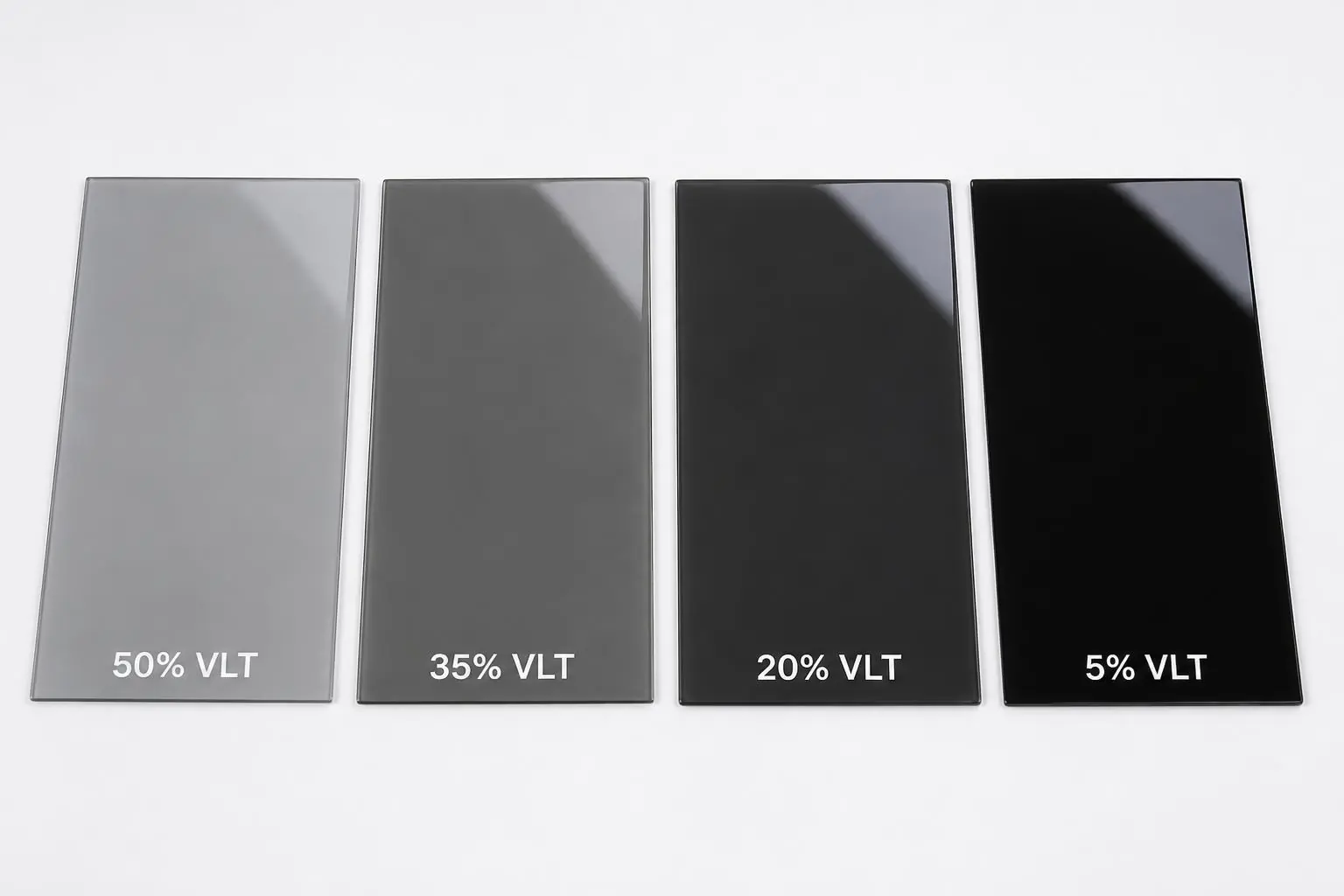
See what each shade looks like
Tap a shade to compare how it looks on the vehicle.
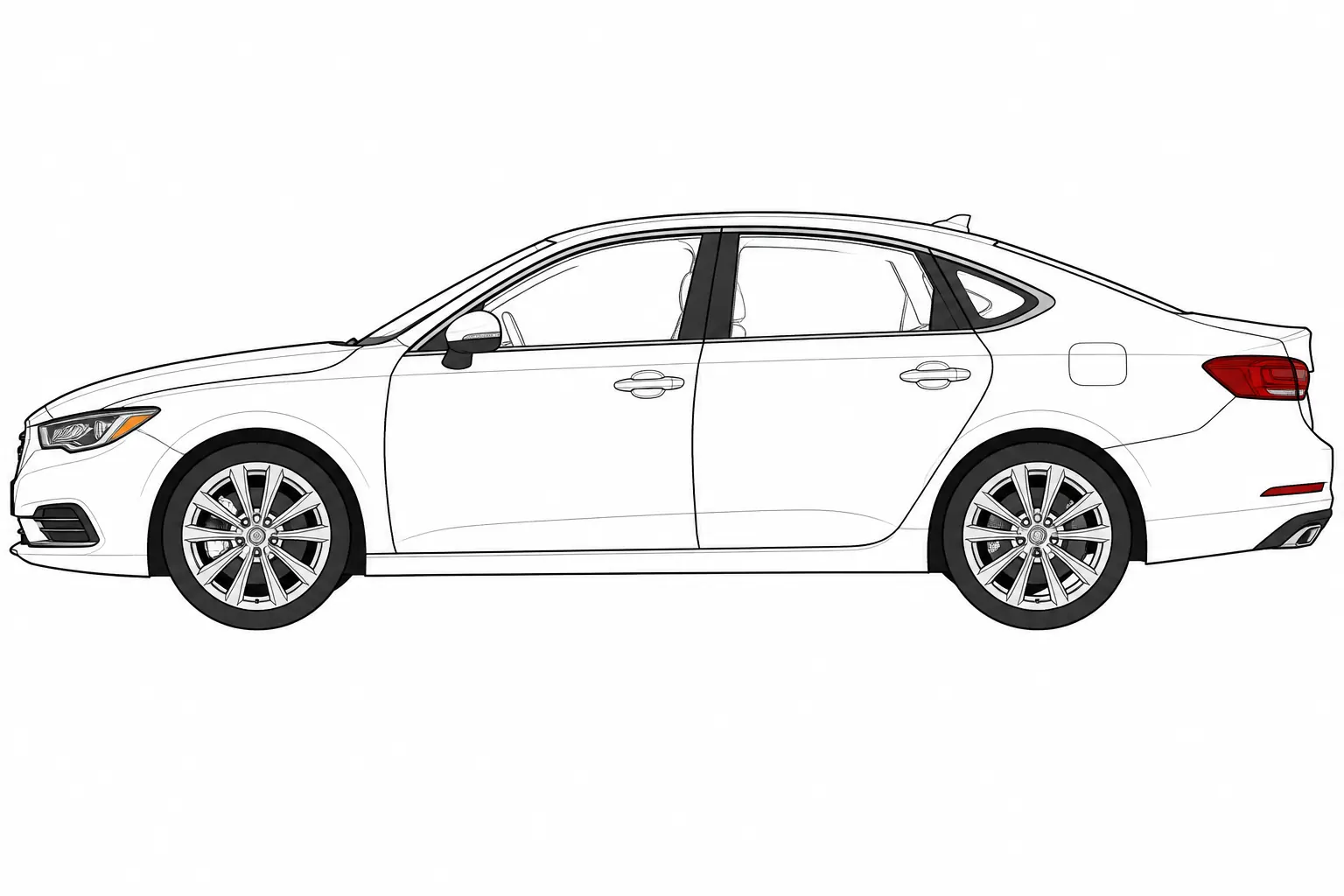
Front-side VLT requirements vary by province.
Light through
20%
Nickname
Dark
Night driving
OK
High privacy
The default rear choice. Strong privacy, strong heat rejection, still workable at night. What most people picture when they say “tinted windows.” Front-side requirements vary by province.
Front-side VLT requirements vary by province. See the provincial figures before choosing a shade.
The four shades
5% — "Limo"
Rear windows only. Almost total privacy, darkest possible look. Night visibility is genuinely poor — reversing in an unlit parking lot is hard. Common on cargo vans and rear glass where privacy matters more than visibility.
- Privacy
- Maximum
- Night driving
- Difficult
- Front requirement
- Varies by province
20% — "Dark"
★ Most popularThe default rear choice. Strong privacy, strong heat rejection, still workable at night. This is what most people picture when they say “tinted windows.”
- Privacy
- High
- Night driving
- Fine
- Front requirement
- Varies by province
35% — "Medium"
Visibly tinted and easy to see out at night. Most provinces require 70% VLT on front sides; check the exact figure on your province page.
- Front requirement
- Varies by province
50% — "Light"
Subtle. Heat rejection without the dark look. Barely reads as tinted. With ceramic film you still get 99% UV block and serious heat rejection — the benefit is thermal, not visual.
- Front requirement
- Varies by province; many specify 70% VLT.
Can I tint my front side windows in Canada?
The required VLT varies by province.
Many provinces specify 70% VLT on the windows beside the driver. British Columbia and Alberta state that no aftermarket film is permitted there. Every province's figure is listed below.
Ontario
No specific VLT number. The Highway Traffic Act s.73(3) prohibits film that "substantially obscures the interior of the motor vehicle when viewed from outside" — an officer’s judgment call. Aftermarket windshield film is banned outright on vehicles manufactured after 1 January 2017.
British Columbia
The strictest in the country — restrictions apply to all windows, not just the front.
Quebec & Alberta
Quebec requires at least 70% VLT. Alberta permits no aftermarket tint on the driver or front-passenger side window.
Last reviewed July 2026. See tint laws by province.
Rear windows: where you're free
Rear side windows and back glass have no VLT restriction in most provinces, provided both external side mirrors are functional. This is where your shade choice actually matters. Pick for privacy, heat, and night visibility — not for the law.
Shade ≠ heat rejection
A dark dyed film can reject less heat than a light ceramic film. Darkness and heat rejection are different properties. Dyed film gets dark by absorbing visible light — which does little for infrared heat. Ceramic film rejects infrared regardless of how dark it looks.
A 50% ceramic can outperform a 20% dyed film on heat — while staying far closer to legal.
We only sell ceramic. Why that matters →
How to choose
Windows: rear only (recommended), rear + back glass, or back glass only. Then pick a shade by what you care about most.
| What matters most | Pick |
|---|---|
| Privacy first | 5% or 20% |
| Heat, don't care about looks | 35% or 50% ceramic |
| The classic tinted look | 20% ★ |
| Subtle, factory-looking | 50% |
| Drive at night a lot | Avoid 5%. Go 20% or lighter. |
Shade FAQ
Is 35% tint legal in Canada?
Rear side windows and back glass are unrestricted in every Canadian province. Front-side requirements vary by province; many provinces specify 70% VLT. Our tint-law pages publish each provincial figure.
What's the darkest legal tint in Canada?
Rear side windows and back glass are unrestricted in every Canadian province. Front-side requirements vary by province; many provinces specify 70% VLT. Our tint-law pages publish each provincial figure.
Does darker tint block more heat?
Not necessarily. Heat rejection depends on the film's construction, not its darkness. A light ceramic film can reject more heat than a dark dyed film, because ceramic rejects infrared regardless of how dark it looks.
Can I tint my windshield?
No. Ontario bans aftermarket windshield film on vehicles manufactured after 1 January 2017, and most provinces prohibit it or allow only a narrow strip at the top.
What VLT should I get for privacy?
20% is the most popular choice — strong privacy while still workable at night. 5% gives near-total privacy but makes reversing in unlit lots genuinely difficult.
Will 50% tint do anything?
With ceramic film, yes — 99% UV block and significant heat rejection, without looking tinted. The benefit is thermal, not visual.
Ready to pick pieces for your car?
Every kit is ceramic, precut for your factory glass, and shipped from Canada. Choose the shade — we'll cut it.
Keep reading
- Read
Find precut tint for your vehicle
Search 2,197 Canadian-fit vehicles, 1959–2026.
- Read
Canadian tint laws by province
Legal VLT % for every province, verified 2026.
- Read
Ceramic vs. dyed film
Why ceramic lasts 10+ years without fading purple.
- Read
How to install precut tint
7 steps, 2–4 hours, no knife on your glass.
- Read
Precut tint cost in Canada
$180–$390 DIY vs $350–$800 at a shop.
- Read
The Botch-It Guarantee
One replacement within 30 days; you cover $30 shipping.